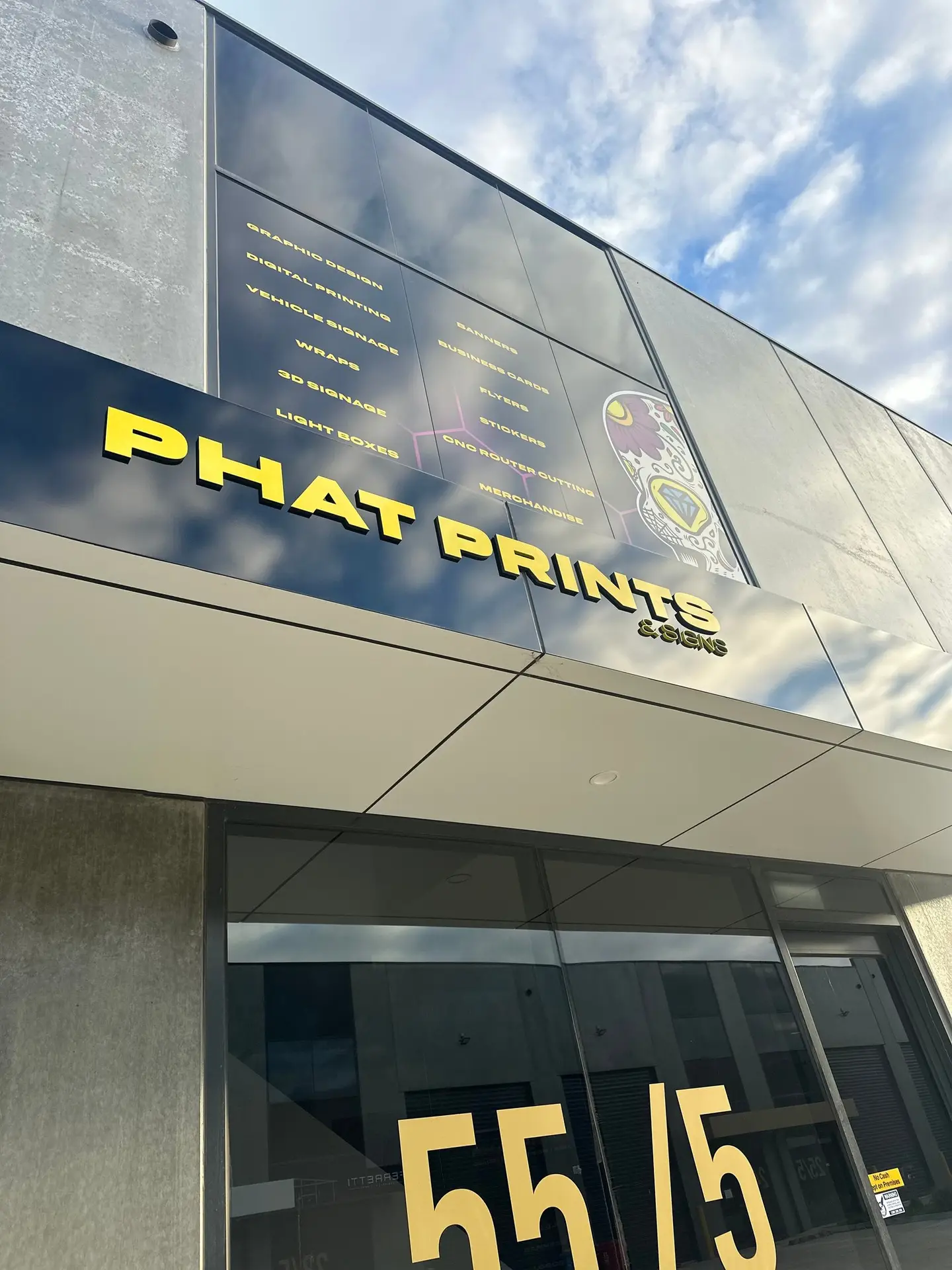

One striking sign can catch the eye, but a coordinated signage system gives people more ways to recognise your business. With custom business signage Melbourne businesses can create a clear, consistent brand experience, from the first street-side glance to the moment a customer walks inside.
Choosing the right formats takes more than picking a sign that looks good. Your building, sightlines and customer journey all shape what will work. Disconnected design and production can also make the finished result feel inconsistent. Outdoor signs, window graphics, dimensional lettering and large-format displays can each play a role when they suit the site and work together as part of your brand.
This guide gives you a practical framework for matching signage to your location and business goals, plus a checklist of what to prepare before a custom project begins. PHAT Prints takes signage projects from concept through production and, where required, installation, helping businesses create a cohesive presence across physical touchpoints. Give each sign a clear purpose and make your brand easier to recognise.
Key Takeaways
- Start with the job your signage needs to do: attract attention, communicate a message or guide customers towards an action.
- Match the sign format to your site and customer journey instead of expecting one sign to do everything.
- For custom business signage Melbourne, consider how outdoor signs, window graphics, dimensional lettering, banners and large-format displays can work together.
- Prepare your brand artwork, final wording, site photos and placement preferences to give the project a clear starting point.
- Understand how briefing, design, proof review, production and installation where required connect to create a cohesive result.
Custom business signage in Melbourne: start with the job
Before choosing a format, decide what customers should notice, understand or do at your site. Custom business signage Melbourne businesses use is designed for a specific physical environment, message and customer journey. Signs can identify a business, share information or help people find their way. For a general overview of signage and its uses, see What is signage?
Map the journey from approach to entry and through the space. A passer-by might first spot your business from the street, then look for the entrance, read a service message and follow signs inside. Each touchpoint has a different job. A project might combine an outdoor sign, window graphics and interior wayfinding, but you don’t need every format. Choose the elements that help people move through the journey.
Match Melbourne business signage to its setting
A street-facing business needs to be recognised from the footpath or road. Signage inside a commercial building may instead need to guide visitors between an entrance, reception and service area. At an event or temporary promotion, a message needs to be easy to spot and understand in the space available.
Assess viewing distance, sightlines, lighting and how people approach the site. A sign seen by passing motorists has less time to communicate than one viewed by pedestrians walking towards a shopfront. Indoors, check for obstructions and consider how lighting changes across the space. Take clear site photos from different approaches and mark approximate sign locations. These details give the design and production process a practical starting point.
Set a clear visibility goal before choosing a sign
Define the goal before settling on a format. Awareness makes the business easier to notice; wayfinding helps customers reach a destination; service information explains what’s available; brand reinforcement builds recognition across the space. A sign can support more than one goal, but choosing one primary message helps people understand it at a glance.
For example, an outdoor sign might prioritise the business name, while a window graphic communicates a service or offer. Inside, a directional message can help customers find their way. Keep each sign focused, then connect the set through consistent wording, logo use and brand colours. Include your current brand assets in the brief so the signage strengthens your identity rather than competing with it.
How to choose custom business signage in Melbourne: five decisions that shape the brief
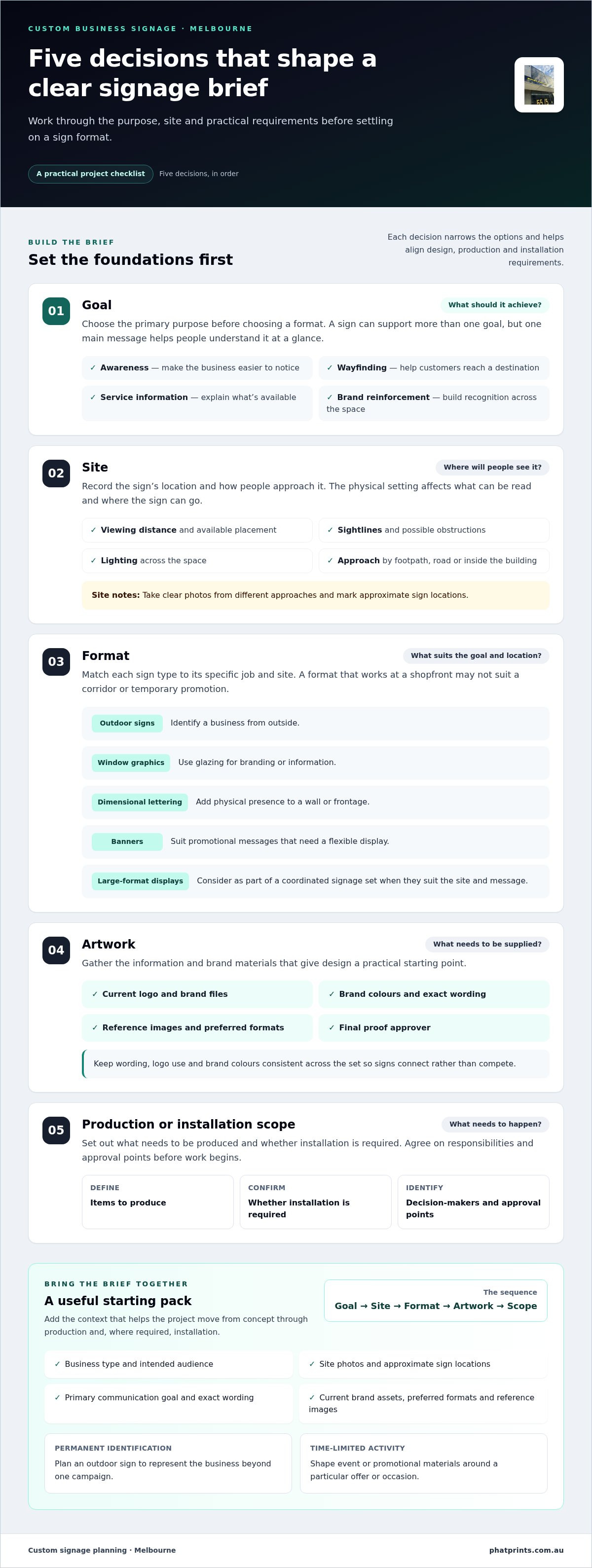
A clear brief turns custom business signage Melbourne from a broad idea into a project with a purpose, suitable formats and agreed next steps. Work through these five decisions in order. Each one narrows the options and helps align design, production and any installation requirements before work begins.
- Goal: Decide what the sign should achieve. Define who needs to see it, the key message they should take away and the action you want to support, such as noticing your business, finding an entrance or understanding a service.
- Site: Record where the sign will sit and how people will approach it. Viewing distance, sightlines, lighting and available surfaces all affect what can be read and where.
- Format: Select a sign type that suits the goal and location. A format that works at a shopfront may not suit a corridor or temporary promotion.
- Artwork: Gather your logo, brand colours, required wording and reference images. Confirm which assets are current and who will approve the final proof.
- Production or installation scope: Set out what needs to be produced and whether installation is required. Identify decision-makers and approval points so the project can move from concept to completion with shared expectations.
Build a signage brief around audience, site and message
Give the brief enough context to guide practical decisions. Include your business type, intended audience, site photos, approximate sign locations and primary communication goal. Add existing brand files, exact wording, preferred formats and reference images that show the look or placement you have in mind. Marketing has a broader purpose than promotion alone; the American Marketing Association’s definition of marketing helps frame signage as one physical expression of how a business communicates value.
Separate permanent identification from time-limited activity. A long-term outdoor sign needs to represent your business beyond one campaign, while event or promotional materials can focus on a particular offer or occasion. This distinction helps shape the message, artwork and production plan.
Choose a format that serves the brief
Outdoor signs identify a business from outside. Window graphics use glazing for branding or information. Dimensional lettering adds physical presence to a wall or frontage, while banners suit promotional messages that need a flexible display. Compare each option against the site, viewing distance and available placement. The right fit can make the message clearer and the brand more cohesive.
If glazing is the main requirement, include the window area, visibility from each approach and the message the graphics need to carry in your brief. For support turning that brief into signage, explore PHAT Prints’ signage work.
Compare business signage formats for Melbourne sites without treating every sign the same
Each sign format has a different job. A strong custom business signage Melbourne plan matches the site, audience and message rather than choosing a format because it’s fashionable. Consider how the options can complement one another: an outdoor sign identifies the business, window graphics carry information at the glazing, and interior lettering reinforces the brand once customers are inside. This puts marketing strategies and best practices into practice by bringing a consistent message to the places customers encounter your business.
| Format | Typical setting | Communication role | Planning consideration |
|---|---|---|---|
| Outdoor signs | Shopfronts and business sites | Establish a visible presence and identify the business | Consider approach, sightlines and viewing distance |
| Window graphics | Shopfront or office glazing | Communicate brand or service information at the glass | Assess the glazed area, visibility and desired balance of graphics and transparency |
| Dimensional lettering | Frontages, reception areas or interior walls | Create a tactile brand focal point | Choose a position where the lettering can be seen clearly in its surroundings |
| Banners | Promotional or event settings | Give a campaign or message a flexible display | Match the placement and wording to the period of use |
| Large-format displays | Business interiors, events or promotional spaces | Present a prominent brand or campaign message | Plan the scale and location around the audience’s view |
Choose signage for the frontage, glazing or interior
Outdoor signs help establish a business presence, with placement shaped by how customers arrive and what they can see. Window graphics make glazing a communication surface for brand or service messages. Dimensional lettering adds depth and creates a tactile focal point on a suitable frontage or interior wall. Choose each format to fit its surface and purpose rather than repeating the same message in another form.
Use banners and large-format displays for flexible visibility
Banners and large-format displays can carry a promotion, campaign or event message when a fixed sign isn’t the main requirement. Decide whether the communication is temporary, recurring or part of the business’s permanent identity. A time-specific offer needs wording that can change with the campaign; enduring brand identification calls for a message that remains relevant. These distinctions help keep a coordinated signage plan clear without making every format do the same work.
For more detailed planning, look for dedicated guides to outdoor signs and large-format printing alongside this comparison.
Plan a Melbourne business signage project from artwork to installation
A smooth signage project needs clear inputs and agreed decision points. The usual sequence moves from brief to design development, proof review, production and installation where required. Each stage builds on the last: a well-defined site and message guide the design, and approved artwork gives production a clear direction.
For custom business signage Melbourne, the site matters as much as the artwork. The chosen format, placement, access and surface conditions all shape production and installation planning. Allow time to consider local planning or approval requirements too. These can vary by location and signage type, so check the applicable details for your site before production begins rather than assuming one rule covers every Melbourne location.
Prepare artwork and information for a smoother project
Gather the essentials before the design stage. A useful starting pack includes:
- Existing logo and brand files, including vector artwork where available.
- Brand colours, final wording and any required contact details.
- Clear site photographs showing the intended placement and surrounding area.
- Reference imagery and preferences for format, position and overall look.
Review the proof carefully before approving it. Check spelling, phone numbers, web addresses, dimensions, logo use and how the design sits in the intended location. Resolve any corrections at this stage, before production starts. For more detailed file setup guidance, use the artwork preparation guide.
Coordinate production and installation around the site
Before production starts, align on the selected format, approved artwork, project scope and any installation requirements. Site access and placement can affect how the work is planned, so share relevant photos and practical site details early. Confirm who will review the proof and sign off the final design. Clear approval points keep decisions moving and help avoid unnecessary changes later.
PHAT Prints connects the project stages, taking custom signage from concept through production and, where required, installation. This joined-up process turns a brand brief into a finished physical presence while keeping the agreed scope in view. Plan around the project sequence and site requirements rather than relying on a one-size-fits-all schedule.
Bring your artwork, wording and site details together, then request a signage quote to start shaping the project.
Bring custom business signage in Melbourne together with PHAT Prints
A cohesive signage project starts with a clear business goal and a realistic view of the site. Match the message to the location, choose formats that suit the audience and prepare the artwork needed to bring the idea to life. With custom business signage Melbourne businesses can make distinctive, connected choices without treating every available format as essential.
PHAT Prints works with businesses to take signage projects from concept through production and, where required, installation. That connected process helps turn a brand brief into physical touchpoints shaped around the project, whether the priority is an outdoor sign, window graphics, dimensional lettering or a large-format display.
Create a consistent brand presence across physical touchpoints
Selected signs and print materials can reinforce the same identity at different moments in the customer journey. An outdoor sign might establish the business name, window graphics can share a service message, and a banner can support a specific promotion. The combination should fit the site and purpose, not fill every available surface.
Keep typography, colours, logo use and message hierarchy consistent across the formats you choose. This gives customers a recognisable thread from the frontage into the business, even when each item has a different role. If posters or flyers support the same campaign, carry the visual language across those pieces too. A focused selection will feel more deliberate than a collection of unrelated signs.
Move from signage idea to a clear next step
Prepare a short project brief before getting started. Note what the signage needs to achieve, who it needs to reach and where it will be placed. Add site photos, approximate sign locations, preferred formats, existing brand artwork and final wording where available. These practical details connect the creative direction to the real site and clarify what the project needs to cover.
PHAT Prints’ website lets customers request a quote and upload artwork. Include the information you have, such as placement preferences, to give the project a clear starting point. A well-prepared brief supports the design and production stages, while the agreed scope defines whether installation is part of the project.
Start your custom signage project with PHAT Prints and turn your brief into a consistent brand presence.
Turn your signage brief into a standout presence
Effective custom business signage Melbourne businesses can rely on starts with a clear goal, a close look at the site and formats chosen for a purpose. Prepare your brand artwork, wording and placement details, then make sure each sign supports a consistent identity across the customer journey.
PHAT Prints tailors signage and print projects to the brief, taking them from concept through production, with installation where required. The process turns your brand into a physical presence shaped around your site and business needs.
Bring your ideas, artwork and site information together, then start your custom signage project with PHAT Prints.
Frequently Asked Questions
How do I choose the right business signage for my Melbourne premises?
Choose signage around the message, site and customer journey. Decide what people should notice, understand or do, then consider how they approach the premises, how far away they’ll see the sign and which surfaces are available. A street-facing business may need clear outdoor identification, while an interior may need directional or service information. For custom business signage Melbourne, a brief with site photos and preferred placements helps match formats to real conditions.
What types of custom business signage can a Melbourne business use?
Melbourne businesses can use outdoor signs, window graphics, dimensional lettering, banners, posters and large-format displays. Each format serves a different purpose: outdoor signs identify the site, window graphics use glazing to carry brand or service messages, and dimensional lettering creates a physical focal point. Banners and large-format displays can support promotions or events. Select formats according to your location, message and audience rather than trying to use every option.
Can business signage combine outdoor signs, window graphics and dimensional lettering?
Yes. Combining formats can create a connected brand experience when each sign has a distinct role. An outdoor sign can identify your business, window graphics can share a service message, and dimensional lettering can reinforce the brand inside. Keep logo use, colours, typography and wording consistent across the set. Plan around the site and customer journey, and use only the formats that help people recognise, understand or navigate your business.
Do I need council approval for business signage in Melbourne?
Approval requirements can depend on the sign type, its placement and the council area where the business is located. Requirements in the City of Melbourne may differ from those in other Victorian municipalities, so don’t assume one rule applies across Greater Melbourne. Before confirming a sign’s placement or proceeding with production, check the relevant council’s planning and signage requirements for your site and proposed format.
How do I prepare artwork for custom business signage?
Gather your current logo files, brand colours, final wording and reference images before design begins. Vector logo artwork is useful where available. Include site photos and the intended sign location so the layout can be considered in context. Review the proof carefully for spelling, contact details, logo use, dimensions and placement. Resolve any changes before approving it for production, as the proof is your opportunity to check the details together.
Can PHAT Prints manage signage design, production and installation?
Yes. PHAT Prints takes business signage projects from concept through production and, where required, installation. The project is shaped around your brief, selected formats and site context, with design development and proof review helping align the artwork before production. Share your goals and site information at the outset to define the scope and keep each stage connected.
What should I include when requesting a business signage quote?
Include your business goal, site location, clear photos of the proposed sign areas, approximate placement and preferred formats. Add final wording, current brand artwork, colours and any reference images that show the direction you have in mind. Note whether installation is required. These details help shape a project-specific quote. PHAT Prints’ website lets you request a quote and upload artwork as part of getting your signage project underway.
